


A pediatric psychiatrist is a specialized medical doctor who evaluates mental health conditions, identifies underlying physical factors, and oversees medication management for children and teens. For families seeking dedicated child psychiatric support throughout Canton and the surrounding South Shore communities, clinical availability can vary. A qualified medical specialist must perform a thorough, individualized evaluation to determine the most effective and safe treatment plan for your child.
Key Takeaways
- Know the care options: Psychiatrists assess mental health and manage medication. Psychologists and therapists provide therapy and testing.
- Check access and coverage: Start with the child’s pediatrician. Confirm insurance, referrals, and provider availability.
- Know when TMS may help: NeuroStar TMS may be an option for some patients with MDD, OCD, or anxious depression after standard treatment has not helped enough.
What Do Child Psychiatry Services Include?
A pediatric psychiatrist is a doctor who treats mental health problems in children and teens. The doctor can check symptoms, make a diagnosis, prescribe medicine, and work with other providers.
A child psychiatrist reviews overall health, including development, physical health, family history, school, sleep, medicines, and home life. Common reasons for a visit include ADHD, anxiety, depression, mood problems, trauma symptoms, and concerns about autism or other developmental conditions.
Not every child needs medicine. Treatment depends on age, symptoms, daily life, safety, and past treatment. Care may involve:
- A psychiatrist for medicine
- A therapist for counseling
- A pediatrician for physical health and other medicines
- School staff, with consent, to share information
Availability, insurance, and referral rules can change. Check these before an appointment. The first visit usually includes a detailed health and mental health history. Bring a list of medicines, past evaluations, school reports, and other records if available.
What Is Pediatric Mental Health Care?
Psychiatrists and psychologists both treat mental health concerns, but their roles are different.
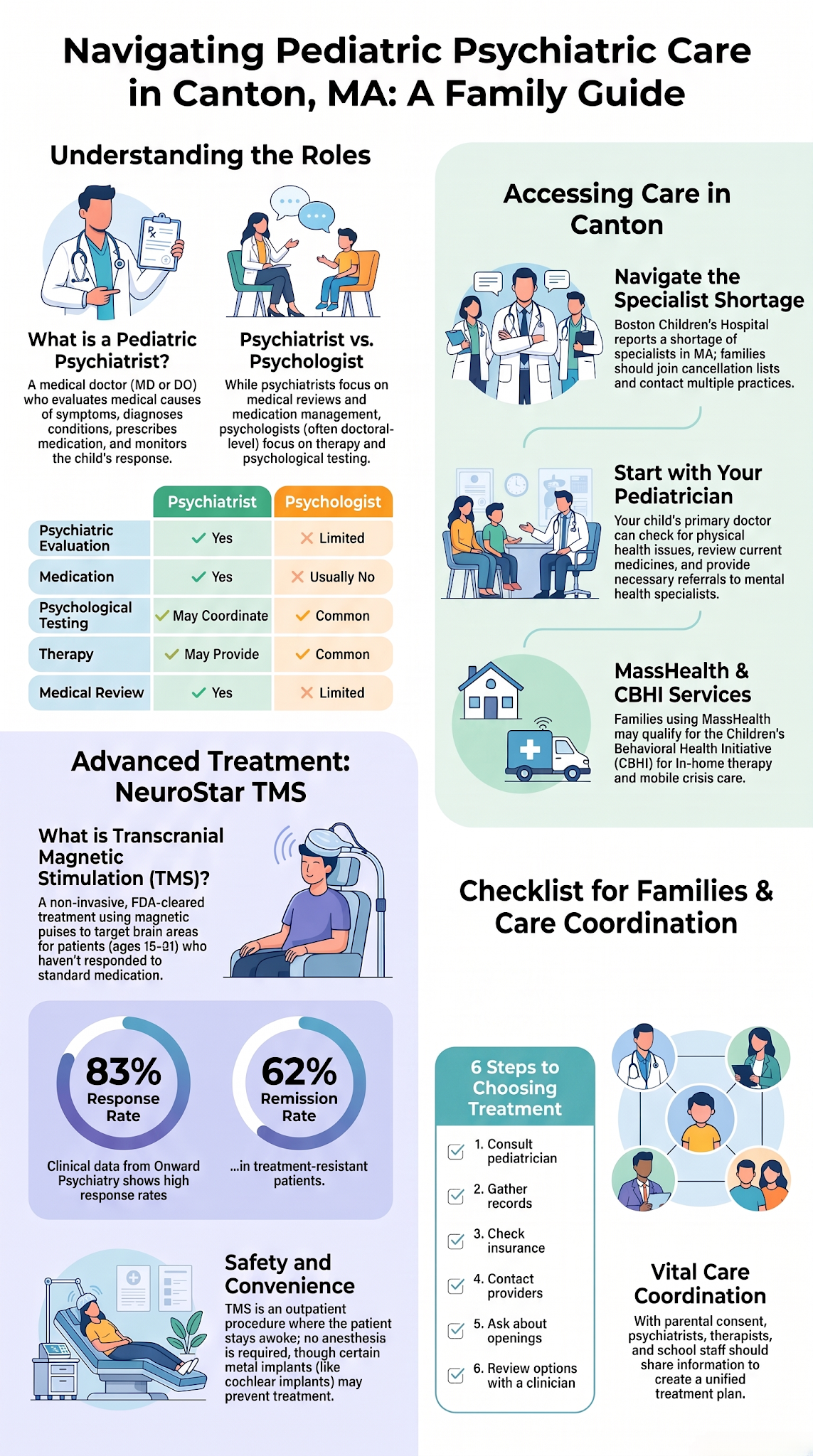
A pediatric psychiatrist is an MD or DO who specializes in child and adolescent psychiatry. Because a psychiatrist is a medical doctor, the clinician can evaluate medical causes of symptoms, diagnose psychiatric conditions, prescribe medication, and monitor the child’s response.
A child psychologist usually has a doctoral degree in psychology. Psychologists often provide therapy and psychological testing. They usually do not prescribe medication.
| Care need | Psychiatrist | Psychologist |
| Psychiatric evaluation | Yes | Limited |
| Medication | Yes | Usually no |
| Psychological testing | May coordinate | Common |
| Therapy | May provide | Common |
| Medical review | Yes | Limited |
Consider a child with anxiety, poor sleep, and missed school days. A psychiatrist may assess whether anxiety, depression, a medical issue, medication, or another problem is causing the symptoms.
A psychologist or therapist may then provide cognitive behavioral therapy, also called CBT. If medication is needed, the psychiatrist can prescribe and monitor it.
These services can work together. Many children need both medical care and therapy.
The child’s pediatrician can also be a good first contact. The pediatrician can check for physical health problems and review current medicines. The doctor can also help decide whether a mental health evaluation is needed.
Parents should not assume that every behavior problem needs psychiatric medication. Some children may need therapy. Others may need school support, changes at home, or a medical evaluation. For children with depression who meet appropriate clinical criteria, TMS therapy for depression may also be considered when standard treatments have not provided enough benefit.
A careful assessment should come first.
How Can Families Find Child Psychiatric Support in Canton?

Families can start with the child’s pediatrician or health plan. A pediatrician can review symptoms, check for medical concerns, and refer the child to a mental health provider when needed.
MassHealth families may also qualify for the Children’s Behavioral Health Initiative (CBHI), which offers services such as care coordination, in-home therapy, family support, and mobile crisis care for eligible children and youth through age 20.
Finding an appointment may take time. As noted in Academic Psychiatry:
“Suicide is the second leading cause of death among children and adolescents, and the rates of suicide attempts have shown alarming increases. Early identification, targeted risk assessment, and rapid access to psychiatric intervention are critical to mitigating youth suicide risk.” – AAP Publications
Families can contact several practices and ask about openings or cancellation lists.
Before booking, ask about:
- Age and diagnosis
- Insurance coverage
- Referral requirements
- Telehealth options
- Medication management
- Current openings
The first visit may cover the child’s health, development, school, sleep, behavior, and past treatment. If the child has severe symptoms or an immediate safety concern, seek urgent or emergency care instead of waiting for a routine visit.
How Does Child Psychiatric Treatment Work With Insurance?
Insurance can affect access to child mental health care. Before an appointment, families should check:
- Network status
- Referral rules
- Prior authorization
- Deductibles
- Behavioral health benefits
MassHealth families should ask if their child qualifies for CBHI services. These programs can provide care outside a standard office visit. This may help when symptoms affect daily life.
Commercial plans vary. Some require a referral from the child’s primary care doctor. Others allow families to contact a mental health provider directly.
Provider directories may be out of date. Call the practice to confirm the doctor accepts the plan and is taking new pediatric patients.
A child may see a psychiatrist, therapist, pediatrician, and school counselor. With consent, providers can share information that guides treatment. Parents can ask what will be shared and who will receive it. With consent, school staff may share details about attendance, learning, behavior, or changes.
The clinician should match treatment to the child’s needs. For patients with depression and significant anxiety, TMS therapy for anxious depression may be considered when clinical criteria are met. Others may need a developmental evaluation, school support, or a higher level of behavioral health care. Review the plan over time.
How Does Onward Psychiatry Fit Into Child Mental Health Care?

Families considering Onward Psychiatry should ask about the child’s age, diagnosis, past treatment, insurance, and available services.
Onward Psychiatry offers NeuroStar transcranial magnetic stimulation (TMS) for some mental health conditions. NeuroStar is FDA-cleared for major depressive disorder, obsessive-compulsive disorder, and anxious depression in certain patients.
It is not for every child or teen. Onward Psychiatry’s clinical information lists patients ages 15 to 21 who have not reached remission with standard medication.
Before treatment, a clinician reviews:
- Diagnosis and treatment history
- Medical history
- Safety concerns
TMS uses magnetic pulses to target brain areas. The patient stays awake. Anesthesia or sedation is not needed. Onward Psychiatry reports an 83% response rate and a 62% remission rate in treatment-resistant patients. These numbers describe groups. They do not predict one person’s response.
TMS may be used with medicine or therapy. It does not always replace them. Safety limits include certain metal implants, electronic or magnetic devices, cochlear implants, some deep brain stimulation devices, and a history of seizures or brain or nerve problems. An online checklist cannot confirm safety.
The treating clinician must review the patient’s health history and implants. For patients who meet criteria, TMS may be an outpatient option when standard medication has not helped enough. It is a specialized treatment. For anxious depression, see TMS therapy for anxious depression.
What Should Families Ask Before Choosing Treatment?

Families should consider the child’s age, symptoms, past treatment, insurance, and the type of care needed. Before the first visit, ask if the clinician treats the child’s age group and condition. Also ask about medication, therapy, follow-up visits, and insurance.
For TMS, ask if the child’s diagnosis and treatment history meet the treatment criteria. For children and teens being evaluated for OCD, TMS therapy for OCD may be discussed when clinically appropriate. The clinician should also review medical devices, neurological conditions, and other safety concerns.
A few steps can help:
- Talk with the child’s pediatrician.
- Gather medical and school records.
- Check insurance and referral rules.
- Contact qualified providers.
- Ask about current openings.
- Review treatment options with the clinician.
For families exploring specialized youth mental health care locally, appointment timelines and program openings can vary. A clinician must conduct a comprehensive assessment to determine which interventions and therapies are appropriate for your child’s stage of development.
The child’s pediatrician can help guide the next step and provide a referral when needed.
Choosing The Right Pediatric Psychiatric Care
Finding supportive mental health care for your child starts with assessing their age, symptoms, medical history, and insurance coverage. If your child faces an acute mental health crisis or thoughts of self-harm, call or text 988 immediately to reach the Suicide and Crisis Lifeline.
When choosing a pediatric psychiatric specialist in the Canton area, confirm that the clinic has direct clinical experience managing your child’s specific developmental and behavioral needs. Onward Psychiatry provides comprehensive outpatient psychiatric evaluations, medication management, therapy, and specialized interventional treatments for local families. Contact Onward Psychiatry today to schedule an initial clinical consultation and explore personalized care options.
FAQs
When should families consider consulting a pediatric psychiatrist near me?
Families should consider consulting a child psychiatrist when persistent mood changes, severe anxiety, behavioral disruptions, or ongoing emotional distress begin to interfere with a child’s schoolwork, sleep patterns, or relationships. Across Canton and nearby Massachusetts communities, a board-certified child and adolescent psychiatrist can identify the root causes of these challenges and collaborate with caregivers to establish a supportive, tailored treatment path.
What conditions does a child and adolescent psychiatrist treat?
Pediatric psychiatrists treat a broad spectrum of diagnoses, including ADHD, depression, generalized anxiety, OCD, mood disorders, and trauma-related symptoms. Because treatment is tailored to the child’s developmental stage, care plans may blend medical management with psychotherapy, school accommodations, or family behavioral support.
How do psychiatric appointments work for younger children?
For younger children who may struggle to express their feelings in words, appointments rely heavily on parent and caregiver insights. The clinician observes the child’s behavior, asks about developmental milestones, and reviews sleep and social routines to build a comprehensive clinical picture.
How can parents support ongoing psychiatric treatment at home?
Caregivers can support treatment by maintaining structured daily routines, keeping open communication about medication side effects, and attending routine follow-up reviews. Sharing updates from teachers or school counselors also gives the clinician a clearer view of the child’s progress outside the home.
What should we expect during an initial youth psychiatric evaluation?
The first evaluation focuses on understanding your child’s emotional and behavioral health history, physical wellbeing, and current symptoms. The clinician uses this time to establish an accurate diagnosis, outline possible treatment approaches (including therapy or medication), and answer any questions your family has about next steps.
References
- https://publications.aap.org/pediatrics/article/144/5/e20191912/38209/Increases-in-Rates-of-Suicide-and-Suicide-Attempts
- https://www.ovid.com/journals/nebior/abstract/10.1016/j.neubiorev.2025.106258~neurotherapy-for-children-and-adolescents-with-psychiatric