
ECT generally works faster than TMS for severe or treatment-resistant depression, but TMS usually avoids anesthesia and causes fewer cognitive effects. The American Psychiatric Association describes ECT as highly effective for severe depression.
When evaluating TMS vs ECT, the two treatments differ significantly in how they’re given, how quickly they act, and the side effects patients may experience. So which option fits which situation? Keep reading to compare the clinical trade-offs and understand where TMS or ECT may fit.
Key Takeaways
- TMS uses magnetic stimulation. ECT uses a controlled seizure under anesthesia.
- ECT often relieves symptoms faster and may suit severe depression when rapid improvement matters. TMS is done as an outpatient treatment, with fewer cognitive effects.
- Treatment choice depends on the diagnosis, symptom severity, medical eligibility, past treatment response, and cognitive concerns. How fast symptoms need to improve matters, too.
What Is the Difference Between TMS and ECT?
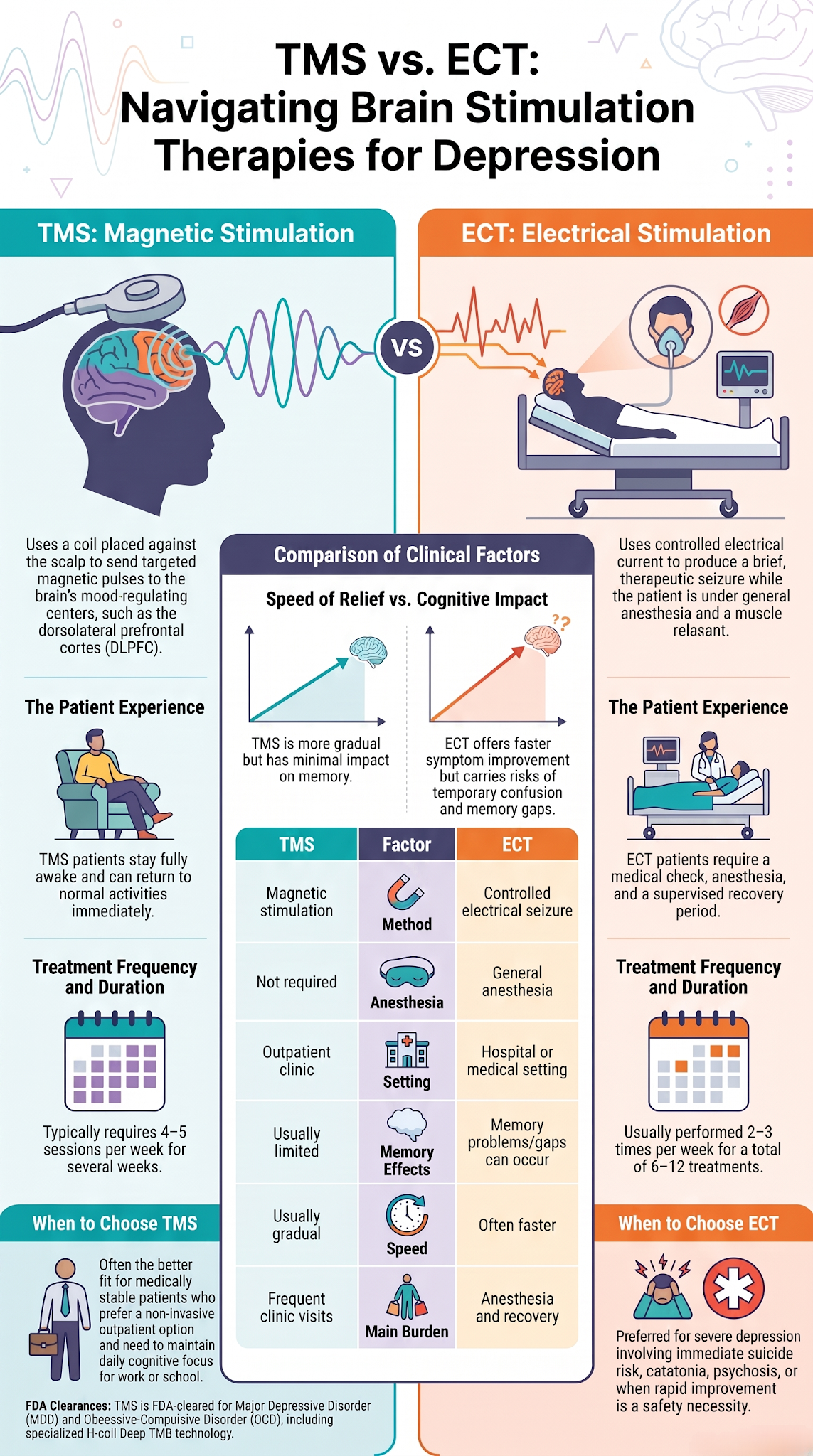
In a direct comparison of TMS vs ECT, TMS uses magnetic pulses to stimulate targeted brain areas, while ECT uses electrical stimulation to produce a brief, controlled seizure under general anesthesia.
With TMS, a coil placed against the scalp sends magnetic pulses to the target area. The patient stays awake, and the treatment does not intentionally cause a seizure.
With ECT, the patient receives anesthesia and a muscle relaxant before electrical stimulation is given. The seizure is brief, and the patient is closely monitored throughout the procedure.
TMS is often given 4 or 5 times a week for several weeks. ECT is usually given 2 or 3 times a week, with treatment often completed sooner.
| Factor | TMS | ECT |
| Treatment method | Magnetic stimulation | Controlled electrical seizure |
| Anesthesia | Not required | General anesthesia |
| Usual setting | Outpatient clinic | Hospital or medical setting |
| Memory effects | Usually limited | Memory problems can occur |
| Speed | Usually gradual | Often faster |
| Main burden | Frequent clinic visits | Anesthesia and recovery |
The choice isn’t based on the treatment method alone. A clinician will look at the severity of depression, medical history, past treatment response, and concerns about memory. How quickly symptoms need to improve also matters.
For severe depression that needs a rapid response, ECT may be considered. For a patient who is medically stable and prefers an outpatient treatment without anesthesia, TMS may be a better fit.
Which Treatment Works Faster?
ECT usually improves depression faster than TMS. This can matter when symptoms are severe or when waiting several weeks for improvement may be unsafe.
ECT may be considered for severe depression with suicide risk, catatonia, psychotic symptoms, major loss of function, or rapid worsening. The American Psychiatric Association lists the need for a fast response as one reason a doctor may choose ECT.
As demonstrated in a landmark peer-reviewed review on somatic interventions for treatment-resistant depression (Journal of Clinical Psychiatry):
“ECT is widely available and its effects are relatively rapid in severe TRD.” – PubMed
This rapid mechanism makes ECT the primary clinical choice when a patient presents with acute catatonia, severe psychotic features, or immediate suicide risk where waiting several weeks for medication or standard TMS to take effect poses an urgent safety hazard.
TMS usually takes more sessions, with improvement building over time. This may suit patients whose condition is stable and who don’t need urgent treatment.
Speed matters, but it isn’t the only factor.
How Does TMS Work for Treatment-Resistant Depression?
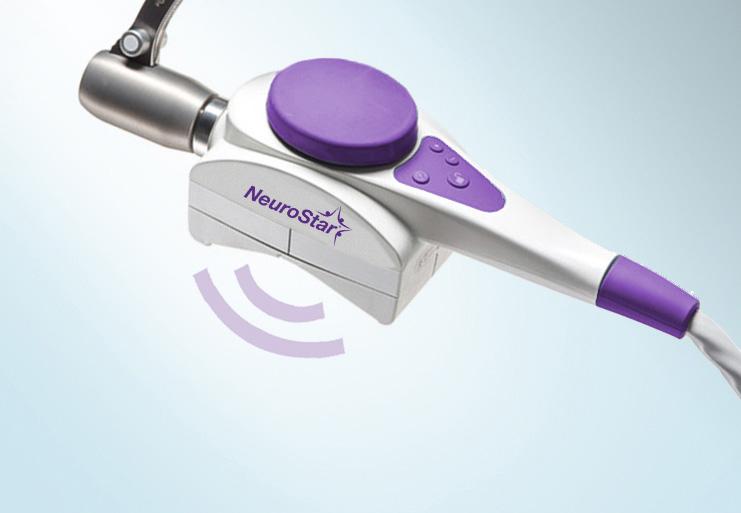
TMS uses repeated magnetic pulses to stimulate a specific brain area involved in mood regulation. The patient stays awake, and general anesthesia isn’t needed.
Before treatment, the clinician identifies the target area and measures the motor threshold. This helps set the right stimulation level. A coil placed against the scalp then delivers the magnetic pulses, often targeting the dorsolateral prefrontal cortex (DLPFC), as part of TMS therapy services for depression.
The FDA has cleared TMS systems for certain conditions, including major depressive disorder and OCD. Common side effects include headache, scalp discomfort, and occasional muscle twitching.
Treatment usually involves several sessions each week for multiple weeks. Patients remain awake and can often return to normal activities afterward.
How Do Standard rTMS and Deep TMS Differ?
Standard focal rTMS and Deep TMS use different coil designs and stimulation patterns. Deep TMS is designed to reach broader and somewhat deeper brain networks.
Some Deep TMS systems use H-coil technology and have received FDA clearance for specific psychiatric conditions, such as the 2018 clearance for OCD. This is particularly relevant when considering TMS therapy for OCD, where the treatment approach and device used can differ from protocols for depression.
In the supporting study, patients who received active treatment improved more than those who received sham treatment.
TMS isn’t one single treatment. The device, stimulation target, settings, and condition being treated all matter.
If you’re considering TMS, ask which device and treatment protocol the clinic uses.
How Does ECT Work for Severe Depression?
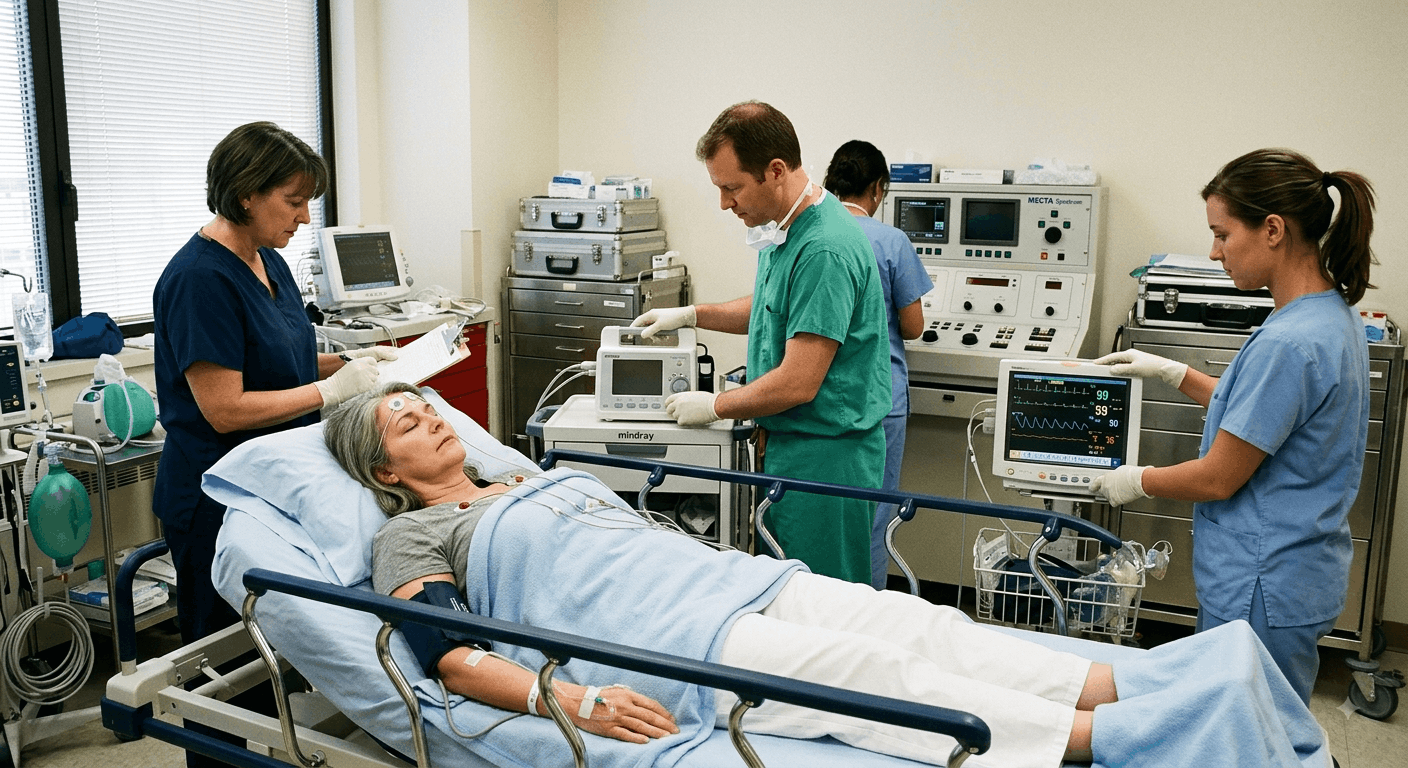
ECT uses general anesthesia, a muscle relaxant, and controlled electrical stimulation to produce a brief therapeutic seizure.
The procedure begins with a medical check and preparation for anesthesia. Once the patient is asleep, electrodes are placed on the scalp. A controlled electrical stimulus is then delivered. The medical team monitors the seizure, heart rate, blood pressure, and other vital signs throughout the procedure.
The muscle relaxant limits the physical movements caused by the seizure. After treatment, the patient moves to a recovery area. Staff continue to monitor the patient as the anesthesia wears off.
ECT is one of the most effective treatments for severe depression. It may be considered when depression is severe, other treatments haven’t helped, or a rapid response is needed. For patients receiving psychiatric care in Massachusetts, treatment decisions may also take into account local clinical availability, including psychiatric care in Norwood, MA.
A typical procedure includes:
- Medical assessment before treatment.
- General anesthesia.
- A muscle relaxant.
- Controlled electrical stimulation.
- A brief therapeutic seizure.
- Supervised recovery.
ECT has a greater medical and logistical burden than TMS. Anesthesia requires screening and monitoring. Patients also need time to recover after each treatment.
Why Can ECT Produce Faster Improvement?
ECT can improve severe depression within a relatively short treatment course. It may be recommended when rapid improvement is important.
ECT is often given 2 or 3 times a week, with about 6 to 12 treatments in a typical course. The number varies based on the patient’s response.
Cognitive trade-offs require transparent evaluation prior to starting care. While modern ultrabrief-pulse ECT techniques have significantly reduced risk profiles compared to historical methods, post-treatment confusion and retrograde amnesia (gaps in memory surrounding the treatment period) remain known possibilities.
Thorough baseline cognitive testing ensures that memory performance can be systematically monitored throughout the treatment course.
These effects should be discussed before treatment, especially for patients with existing memory concerns. In severe depression, the benefit of faster improvement may outweigh the added burden of anesthesia and recovery.
When Might TMS Be Preferred Over ECT?
TMS may be considered when a patient needs treatment for depression but does not require the rapid response that ECT can provide.
TMS does not require general anesthesia. Patients stay awake during treatment and can usually leave the clinic afterward. Most can return to their usual activities without a lengthy recovery period.
Another factor is cognition. Memory impairment is much less common with TMS than with ECT. This may matter to patients who are concerned about memory or need to stay focused at work or school.
As highlighted by research in the Journal of Psychiatric Practice:
“Was well tolerated with less negative impact on cognitive functioning than ECT.” – Journal of Psychiatric Practice
TMS has its own limitations, though. Treatment usually requires many clinic visits over several weeks. It also may not be the right choice when depression has become an immediate psychiatric emergency.
The patient’s condition comes first.
When Might ECT Be Preferred Over TMS?
ECT may be preferred when depression is severe and a fast response is needed. This may include catatonia, psychotic depression, a high risk of suicide, or a serious drop in daily function.
ECT may also be considered when other treatments haven’t helped or when waiting several weeks for another treatment to work may not be safe.
Severity isn’t the only factor. The medical team will also look at the patient’s overall health, risks linked to anesthesia, past treatment response, possible memory effects, and personal preferences.
In some cases, faster improvement may be worth the added risks and recovery that come with ECT. In other cases, TMS or another treatment may make more sense, particularly when symptoms are stable and TMS therapy for anxious depression may be appropriate.
The final choice should be made with the patient’s psychiatrist and medical team.
Choosing Between TMS vs ECT for Depression
TMS and ECT both treat depression, but they’re used in different situations. ECT can work faster and may be preferred for severe depression. TMS doesn’t require anesthesia and usually has fewer memory effects. The right choice depends on the patient’s symptoms, medical history, treatment goals, and need for rapid improvement.
If you’re considering TMS for depression or OCD, Onward Psychiatry offers NeuroStar TMS Therapy, an FDA-cleared, non-invasive treatment, with in-person and telehealth care across Massachusetts. Learn more about TMS treatment at Onward Psychiatry. If you or someone you know is facing an immediate mental health crisis, call or text 988 for free, confidential 24/7 support.
FAQs
What ECT side effects should patients know before starting treatment?
Common ECT side effects include headache, muscle soreness, nausea, and temporary confusion after treatment. Memory changes can also occur. ECT memory loss may affect memories from the treatment period or nearby events.
Confusion usually improves soon after treatment, but some patients may experience longer lasting memory problems. A clinician can explain the potential risks based on the patient’s health and treatment history.
How does ECT memory loss usually affect daily life?
ECT memory loss can affect short term recall and memories from the period surrounding treatment. Some patients may have difficulty remembering recent events, appointments, or conversations.
Memory often improves after treatment ends, although some memory gaps may remain. Patients who already have memory concerns should discuss them with their treatment team before starting ECT and ask how cognitive effects will be monitored.
How does ECT versus medication compare for treating severe depression?
ECT versus medication involves different benefits, risks, and treatment requirements. Medication is usually taken regularly and does not require anesthesia. ECT involves brief procedures performed under general anesthesia and may be considered when depression is severe or other treatments have not worked.
The choice depends on the patient’s symptoms, previous treatment response, medical history, potential risks, and treatment goals.
How Do Clinical Outcomes Compare for TMS vs ECT Effectiveness?
When comparing TMS vs ECT, treatment effectiveness varies based on the severity of depression, treatment history, diagnosis, and individual patient response. ECT may provide faster improvement when rapid symptom relief is important, while TMS may be considered when avoiding anesthesia and limiting cognitive effects are priorities.
A psychiatrist can compare the expected benefits and risks based on the patient’s symptoms, medical history, and treatment needs.
What are the main ECT candidacy criteria for treatment?
ECT may be considered for severe depression, psychosis, catatonia, major loss of function, or when rapid improvement is needed. A doctor will also review overall health, anesthesia risks, past treatment, and possible memory effects. The decision is made after an individual medical and psychiatric assessment.